Dry Needling vs Acupuncture for Managing Holiday Muscle Tension
Pembina Physiotherapy & Sports Injury Clinic • November 18, 2026
The winter holiday season often brings extra demands, from travel to hosting gatherings, and these activities can sometimes contribute to increased shoulder or back stiffness. At Pembina Physiotherapy & Sports Injury Clinic, we often meet patients looking for ways to ease muscle tension that’s affecting their comfort and day-to-day enjoyment, especially when regular stretching doesn’t quite bring the desired relief. In these cases, needle-based therapies may offer promising options for those seeking a different kind of support in their recovery. Understanding the differences between dry needling and acupuncture can help you feel more confident about finding an approach that fits your unique needs.
A common question patients ask is whether dry needling and acupuncture are essentially the same treatment for muscle tightness. While both involve the use of fine, sterile needles, they each draw from distinct philosophies and target the body in unique ways. Understanding how each method works with your body’s systems can empower you to make informed choices about your care.
Key Topics Covered:
- Traditional Medicine: The roots of acupuncture
- Western Neurophysiology: The science behind trigger points
- Pain Relief Mechanisms: How needles may interact with soft tissue
- Treatment Selection: Individualizing your care
- Frequently Asked Questions: Addressing common curiosities
Traditional Medicine and Energy Flow
Acupuncture is a practice with deep roots in traditional Chinese medicine. Its core philosophy centers around the concept of Qi—the body’s vital energy—which is believed to flow through specific pathways called meridians. When Qi is thought to become blocked or unbalanced, discomfort or illness can arise. By inserting needles at precise points along these meridians, acupuncture practitioners aim to support the body’s natural healing and balance.
In contemporary clinical settings, our therapists often use medical acupuncture to help stimulate the nervous system. This may encourage the release of endorphins (natural pain relievers) and can sometimes help reduce general inflammation. Many people find it helpful for managing chronic joint pain or everyday stress, though responses can vary from person to person.
Western Neurophysiology and Trigger Points
In contrast, dry needling is an approach based on Western anatomical science. It focuses on myofascial trigger points—localized areas in muscles that can feel tight or tender. These points may limit local blood flow and, in some cases, could contribute to discomfort that is felt elsewhere in the body.
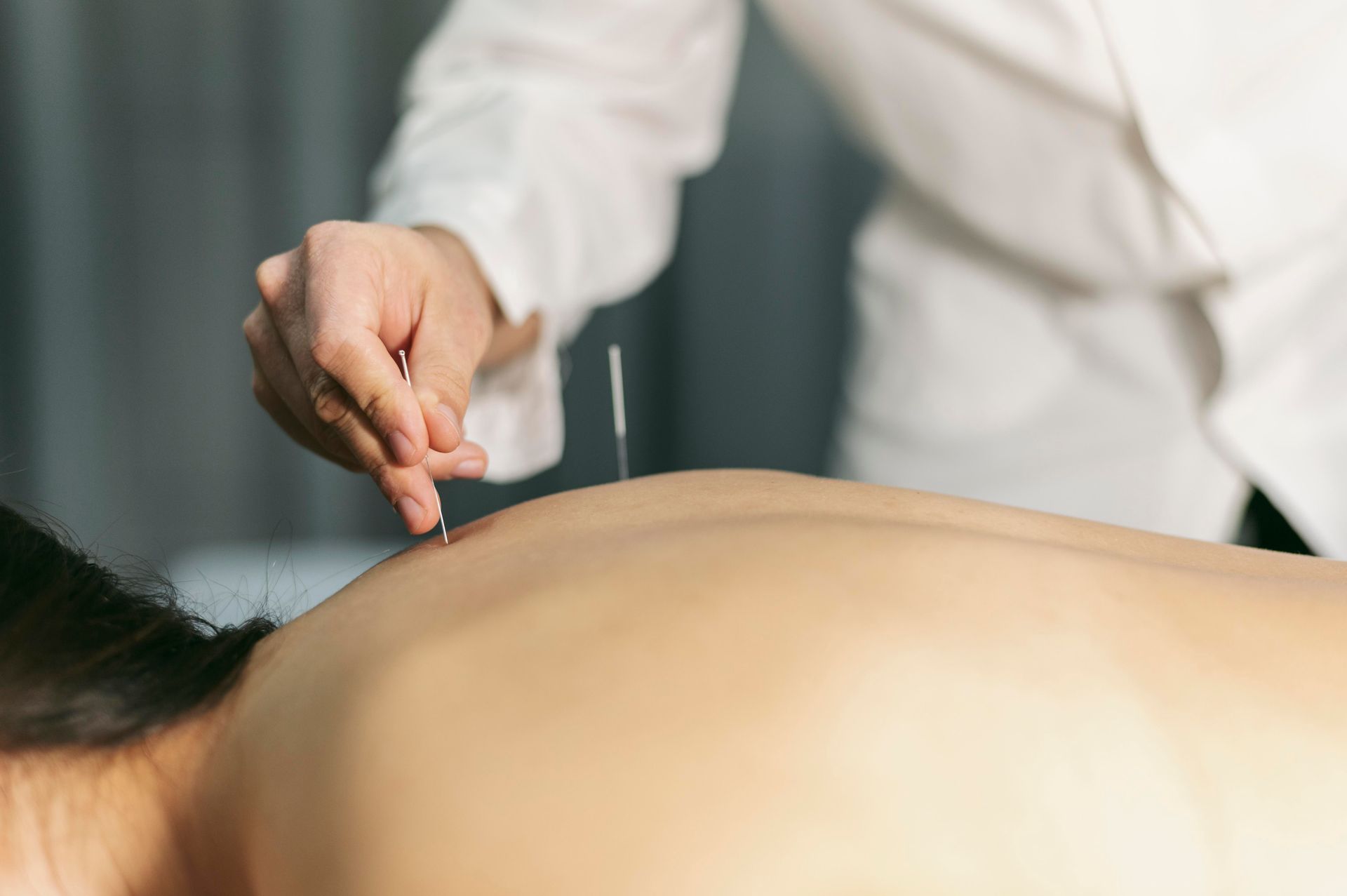
During a dry needling session, the clinician gently inserts a needle into the area of muscle tightness. This can sometimes produce a slight twitch in the muscle, which may help the fibres relax. Many patients find this release helpful, but experiences can differ, and not everyone responds in the same manner.
Pain Relief Mechanisms
People often notice different sensations and responses to these two forms of therapy. Acupuncture tends to focus on promoting overall relaxation and systemic well-being, with many patients describing a calming or heavy feeling during sessions. Dry needling, on the other hand, is often chosen for its ability to focus on very specific areas of muscular tension. For those with targeted muscle restriction, it may offer benefits as part of a broader physiotherapy or rehabilitation plan.
Client Experience: "Been going here for a few years seeing Ainsley. They have always been amazing! After I herniated my back, I really saw how invested and compassionate the entire crew there truly was to the care of their clients. Took the time to get me back on my feet through acupuncture and tons of physio. Can’t say enough nice about this group."
In our experience, combining either of these needle therapies with conventional rehabilitation exercises can further support durable and meaningful improvements—but, as always, each person’s recovery path is unique.
Frequently Asked Questions
Do the needles contain any medication?
No. Both dry needling and acupuncture use thin, sterile needles without any medication or injections. The “dry” simply refers to the absence of any injectable substance; the therapeutic effect comes from the needle placement itself.
Will I be sore after the appointment?
People’s responses vary. Acupuncture generally produces very little post-treatment discomfort. With dry needling, some people notice a mild achiness or fatigue in the area for a day or so, similar to what you might experience after exercising a muscle group that hasn’t been challenged for a while.
Finding Relief for Holiday Stress
Choosing between these therapies truly depends on your specific comfort goals, your medical history, and your preferences. Both acupuncture and dry needling can be helpful for certain kinds of muscle tension or stress, and our clinicians are happy to talk through your questions and help guide you toward a personalized approach.
If you’re curious about how these therapies could fit into your winter wellness plan, get in touch with our team at Pembina Physiotherapy & Sports Injury Clinic. We’re here to help you find the strategies and support that work best for you—throughout the holidays and beyond.
Share This Blog